1

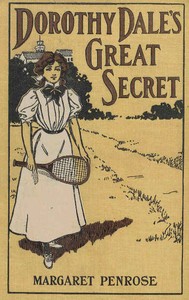
Dorothy Dale's Great Secret — Inside the Classic
8
1
Project Gutenberg
2012
Mystery fiction; Best friends -- Juvenile fiction; Theater -- Juvenile fiction; Runaway teenagers -- Juvenile fiction; Acting -- Juvenile fiction; Buffalo (N.Y.) -- Description and travel -- Juvenile fiction
Readers of public-domain and historical texts
Project Gutenberg digital edition
en
Edition facts
Words: 53,946
Reading time: 235 min
Text sections: 8
Source:
Project Gutenberg record #41558
This editorial note examines Margaret Penrose's use of slang, dialogue rhythm, and descriptive detail in Dorothy Dale's Great Secret, focusing on how the author distinguishes characters through speech patterns and physical comedy, while noting the careful construction of suspense around a runaway girl hidden in an automobile.
Editorial Edition Score
4.7/5
★★★★★
★★★★★
Calculated from edition completeness, EPUB availability, text structure and catalogue metadata. Not a user rating.
Edition quality
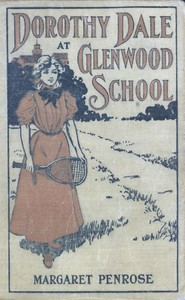
Margaret Penrose opens Dorothy Dale's Great Secret with a conversation that immediately establishes the contrasting voices of its two heroines. Tavia's slang-laden, exuberant speech—"Whew! Don't your mouth water, Dorothy?"—collides with Dorothy's more refined, mock-horror reply: "As if the young ladies of Glenwood School would disgrace their appetites with such vulgar fare!" This verbal sparring, centered on a craving for bologna sausage, reveals not only their friendship but also Penrose's method of characterization through diction. Tavia's earthy, humorous asides and Dorothy's prim, theatrical indignation create a dynamic that drives much of the early comedy.
Slang as Character Signature
Tavia's dialogue is peppered with colloquialisms and exaggerated metaphors. She describes powdered biscuit crumbs as something "doctors administer headache remedies" and proposes a "clam-bake" with stolen hash. Penrose uses these verbal tics to mark Tavia as impulsive and irreverent, in contrast to Dorothy's more measured speech. When Tavia says, "All the same, I distinctly remember that you had a longing for the skin of my sausage," the specificity of the complaint—the skin, the end piece—grounds their banter in shared history. Dorothy, meanwhile, responds with theatrical sighs and poses, such as dropping "her blond head on her arms, in the familiar pose Tavia described as 'thinky.'" The author even has Tavia coin a nickname for Dorothy's pensive mood, further cementing their distinct linguistic identities.
Physical Comedy and Descriptive Detail
Penrose's narration frequently zooms in on physical actions that amplify character. Dorothy "snatched up an empty cracker box, almost devouring its parifine paper" in mock desperation, while Tavia "had made a funnel of the paper and 'took' the powdered biscuits as doctors administer headache remedies." These small, vivid gestures—snatching, funneling, devouring—turn a simple craving into a comic routine. Later, when Nat discovers the runaway Urania has vanished from under the automobile seat, his exclamation—"Well, I'll be jiggered!"—is matched by the narrator's matter-of-fact explanation: "Nat had forgotten the few moments when he sat on the sofa... and it was in those few moments that Urania had managed to undo the catch." The author balances broad comedy with precise timing, making the reader complicit in Nat's oversight.
Suspense Built Through Restricted Knowledge
Penrose constructs suspense by limiting what characters and readers know simultaneously. When Nat visits Mrs. Travers, he is anxious about Urania hidden under the seat, but the reader is privy only to his nervous small talk: "What a pretty view there was from the window." The dialogue between Nat and Mrs. Travers is laden with subtext—Nat's questions about Tavia's whereabouts, Mrs. Travers's vague mention of a "souvenir card"—while the real tension lies in the concealed passenger. Penrose uses the physical barrier of the automobile curtain to create a puzzle: how did Urania escape without being seen? The answer, revealed in retrospect, relies on a gap in Nat's attention, a technique that rewards careful reading.
The Gypsy Girl as a Narrative Device
Urania, the "Gypsy girl," is introduced through action rather than description. She is first mentioned as a concealed presence under the seat, then as a vanished figure. Penrose withholds her appearance, focusing instead on Nat's reactions: "He had made up his mind to take the Gypsy girl back to North Birchland, and was vaguely wondering... why she did not knock." When he finally opens the curtain, she is gone, and the narrator notes, "Swiftly, as no girl but a Gypsy can run, she"—the sentence is cut off in the excerpt, leaving her escape method ambiguous. This elliptical treatment turns Urania into a plot mechanism rather than a fully realized character, her ethnicity invoked to explain her agility and elusiveness. The author uses her as a catalyst for Nat's subsequent actions, without delving into her perspective.
Setting as a Stage for Dialogue
Penrose often uses setting details to frame conversations. The opening scene takes place in a schoolroom, with the girls referencing "Daly's" store and "bologna" as shared touchstones of home. Later, Nat's visit to Mrs. Travers's parlor is described with spatial precision: he sits "near the front of the apartment" to keep an eye on the car, while Mrs. Travers offers him a seat "in the far corner." The physical layout—windows, curtains, distance—becomes part of the suspense. Even the automobile, the "Fire Bird," is treated as a mobile setting, its curtain a barrier that conceals and then reveals. These locations are not mere backdrops but active elements that shape the characters' choices and the story's pacing.
Readers attentive to Penrose's craft will notice how she layers humor and tension through word choice and physical detail. The bologna jokes and the runaway's escape are linked by a common technique: using small, concrete objects—a cracker box, a curtain catch—to advance character and plot. The excerpts suggest a narrative that rewards close attention to what characters say, how they say it, and what they leave unsaid.
Reader reflection
How will you remember this book?
Save your reaction, strongest insight, and memorable passage.
Your progress
0
/
10
2
How did the book work for you overall?
3
Would you recommend this book to another reader?
4
How much effort did this book require?
5
Did you relate to its people, ideas, or situations?
6
How valuable was this book for your own interests?
7
Which aspect of the book did you value most?
8
Do you expect to return to this book?
9
What did this book teach you most?
10