1

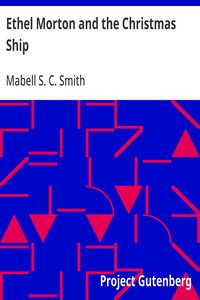
Ethel Morton and the Christmas Ship — Edition Insights
6
2
Project Gutenberg
2011
Entertaining -- Juvenile fiction; World War, 1914-1918 -- United States -- Juvenile fiction; Young women -- Social life and customs -- Juvenile fiction; Handicraft -- Juvenile fiction; Cooking -- Juvenile fiction
Readers of public-domain and historical texts
Project Gutenberg digital edition
en
Edition facts
Words: 60,804
Reading time: 265 min
Text sections: 9
Source:
Project Gutenberg record #36007
This editorial note examines how Mabell S. C. Smith uses dialogue, description, and narrative structure in 'Ethel Morton and the Christmas Ship' to portray World War I-era domestic volunteerism, focusing on the author's choices in diction, character voice, and setting details.
Editorial Edition Score
4.7/5
★★★★★
★★★★★
Calculated from edition completeness, EPUB availability, text structure and catalogue metadata. Not a user rating.
Edition quality
From the opening chapter, Smith establishes a conversational tone that blends family history with contemporary concerns. The dialogue between Margaret, Roger, Helen, and James reveals backstory through natural speech patterns—Roger’s confession that his aunt “drop right down on your door mat” after twenty years sets a colloquial, intimate register. The author uses this exchange to introduce the Morton family’s past without heavy exposition, letting characters’ voices carry the narrative burden.
Dialogue as Exposition
Smith relies heavily on dialogue to convey plot and character relationships. In the first chapter, the conversation about Aunt Louise’s estrangement unfolds through short, overlapping lines: “I suppose Grandfather would have said, ‘I told you so,’” suggests Helen, while James counters with a reflection on pride. This technique avoids authorial intrusion and keeps the reader engaged in the characters’ perspectives. The dialogue also reveals social dynamics—Margaret’s decisive “It’s up to Roger Morton” contrasts with Roger’s more hesitant admission, establishing personality through speech rhythm.
Descriptive Economy in Setting
Smith’s descriptions are functional rather than ornate. The September setting is conveyed through a single phrase—“a few days after school had opened”—and the porch setting is implied by the action of sitting. Later, in Chapter XII, the moonlit road is described with specific sensory details: “The moon lighted the road brilliantly and the machine flew along smoothly.” The author uses light and shadow to create tension, as when Doctor Hancock warns about “heavy shadows that the moon casts.” These details serve the plot (the near-accident with the cow) rather than existing as decorative prose.
Character Voice and Idiolect
Each character speaks with a distinct idiolect. James’s passion for speed emerges in his exclamation, “This is about as near flying as a fellow can get,” and his translation of his father’s physics lesson into “slow up going round corners.” Doctor Hancock’s speech is measured and pedagogical, using phrases like “Words to that effect.” The Ethels are referred to collectively as “the Ethels,” a nickname that signals group identity. Smith differentiates characters through word choice and sentence length, avoiding a uniform narrative voice.
Narrative Structure and Chapter Breaks
The chapter titles function as signposts for the club’s activities: “The United Service Club at Home,” “The Christmas Ship,” “Financial Plans.” Smith uses these headings to organize the episodic plot, which follows the club’s preparations for a charitable project. The narrative moves between group scenes and individual moments, such as James’s driving episode in Chapter XII. This chapter break allows for a shift in focus from the club’s collective work to a personal character moment, demonstrating Smith’s structural flexibility within a didactic framework.
Readers attentive to authorial craft will notice how Smith balances instruction with entertainment. The dialogue-driven exposition and economical descriptions reflect a writer conscious of her audience’s attention span. The novel’s episodic structure, with each chapter advancing a specific task or theme, mirrors the organized volunteerism it depicts. These choices make the text a useful example of early twentieth-century children’s literature that embeds moral lessons in narrative action.
Reader reflection
Record your reading impressions
A brief reflection can help important ideas stay with you longer.
Your progress
0
/
10
2
Was reading this book enjoyable?
3
Would you encourage someone else to read it?
4
Did the language feel accessible?
5
How distinctive were its ideas or approach?
6
Would you like to discuss this book with someone?
7
Was the book moving at the right speed?
8
Was the book easy to understand?
9
What did this book teach you most?
10