1

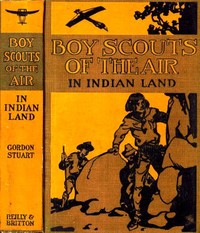
The Boy Scouts of the Air in Indian Land — Edition Insights
1810
1
Project Gutenberg
2011
Boy Scouts -- Juvenile fiction; Indians of North America -- Juvenile fiction; Mystery and detective stories; Aeronautics -- Juvenile fiction
Readers of public-domain and historical texts
Project Gutenberg digital edition
en
Edition facts
Words: 45,052
Reading time: 196 min
Text sections: 5
Source:
Project Gutenberg record #35808
In this 1912 adventure, the Boy Scouts of the Air series blends aviation, scouting, and Native American legend in the New Mexico desert. The opening chapter introduces a cast of boys awaiting a train, while later excerpts show them receiving scout gear and planning to catch a sheep thief. The catalog subjects—Boy Scouts, Indians, aeronautics, mystery—are all present, but the excerpts reveal a stronger emphasis on scouting activities and camaraderie than on Native American content.
Editorial Edition Score
4.7/5
★★★★★
★★★★★
Calculated from edition completeness, EPUB availability, text structure and catalogue metadata. Not a user rating.
Edition quality
The first chapter of The Boy Scouts of the Air in Indian Land opens not with aeroplanes or Indians but with a group of boys waiting for a train in the “hot little box of a depot at Silver City, New Mexico.” The speaker, Jerry, complains about his mother’s lateness, while another boy, described with a “big mop of yellow hair,” is named Dunk. The scene establishes a cast of at least six boys—Jerry, Dunk, Carl, Herb, Fred, and Fly—whose distinct physical traits and voices emerge quickly. The setting is dusty, military, and frontier-like: a “military hack” driven by a “colored soldier” arrives, and the boys later discuss a sheep stealer. The catalog subject “Indians of North America” appears only in chapter titles like “The Legend of the Thunder Bird” and in a single illustration caption describing a “tall, stately, blanketed Indian” with a painted face. The excerpts do not show any extended interaction with Native characters, so the book’s treatment of this subject remains unclear from the available text.
Scouting as a Collective Enterprise
The excerpts emphasize group activity and shared enthusiasm. When the scout uniforms and equipment arrive, the boys open boxes together, shouting “Uniforms” and distributing items labeled with names and measurements. The gear includes “hospital corps pouch,” “signal flags,” “canteens,” and “seven brand new shining Remingtons.” Each item is met with “shouts of delight and surprise.” The boys immediately plan to dress up and parade to Herb’s father’s ranch as a surprise. The dialogue is full of collaborative planning: “How we goin’ to learn about first aid?” asks Gray, and the others assign roles—Carl will teach trailing, Hawke will teach aviation, and Fly’s father will teach craftsmanship. The tone is upbeat and focused on earning badges, with Jerry noting, “it’s fun just the same.” The group dynamic is central, and individual characters are defined largely by their contributions to the patrol.
The Role of Adult Mentors and Generosity
Adults appear as benefactors rather than antagonists. Mr. Hawke, the aviator, agrees to be scout master and immediately helps open boxes, “peeling off his light coat, and rolling up his shirt sleeves.” Herb’s father is repeatedly praised for his generosity: “Oh, dad thought yuh might as well have a good supply,” Herb explains, and the boys wish they could “do somethin’ real fine for him.” The equipment is provided by parents, not earned by the boys. Mr. Stanton sends handbooks and badges. The adults are supportive and present, but the excerpts do not show them in conflict or danger. The boys’ mission to catch a “sheep stealer” is mentioned but not enacted in the provided text. The adult characters function as enablers of the scouting experience, reinforcing a positive, community-minded ethos.
Aviation and the Thunder Bird Motif
Despite the series title “Boy Scouts of the Air,” aviation appears only briefly in the excerpts. Mr. Hawke promises to show “the model of the ‘Thunder Bird Aeroplane,’” and a chapter is titled “The Thunder Bird Attacks.” The Thunder Bird likely connects to Native American legend, but the excerpts do not explain the link. The only aeroplane action described is a tense scene where the boys “crept, wriggled and crawled toward the machine” through smoke and darkness. The catalog subject “Aeronautics” is thus present but secondary to scouting activities. The book’s structure—19 chapters, with titles like “Winning an Aeroplane” and “The First Flight”—suggests that aviation becomes more important later, but the excerpts focus on preparation and equipment rather than flight itself. The Thunder Bird name hints at a fusion of technology and indigenous symbolism, but the text does not develop this in the available pages.
Readers should note that the excerpts cover only the first eleven chapters and parts of later ones, so the full arc of the mystery and the role of the Thunder Bird remain unseen. The book’s language is colloquial and period-specific, with phrases like “duds” for uniforms and “bully for you” as praise. The boys’ voices are differentiated by dialect and temperament—Jerry is impatient, Herb is generous, Dunk is practical. The story appears to value teamwork, resourcefulness, and adult guidance over individual heroism. For those interested in early twentieth-century scouting fiction, this title offers a snapshot of the genre’s conventions before aviation became a common plot device.
Reader reflection
Before you leave, reflect on the book
Use these questions to collect your thoughts before moving on.
Your progress
0
/
10
2
How much did you enjoy the reading experience?
3
Would you recommend this book to another reader?
4
How much effort did this book require?
5
Did it raise ideas you would like to talk about?
6
How distinctive were its ideas or approach?
7
Was the book what you thought it would be?
8
Was the book easy to understand?
9
What changed or sharpened your thinking?
10