1

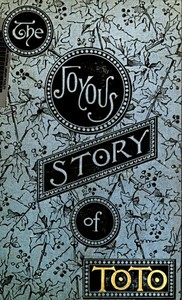
The Joyous Story of Toto — Inside the Classic
1608
1
Project Gutenberg
2011
Animals -- Juvenile fiction; Conduct of life -- Juvenile fiction; Children -- Conduct of life -- Juvenile fiction; Friendship -- Juvenile fiction; Grandmothers -- Juvenile fiction; Blindness -- Juvenile fiction
Readers of public-domain and historical texts
Project Gutenberg digital edition
en
Edition facts
Words: 38,752
Reading time: 169 min
Text sections: 5
Source:
Project Gutenberg record #35281
An editorial note on Laura E. Richards' children's novel, examining the author's use of direct address, playful asides, and nested storytelling in a tale about a blind grandmother and her grandson Toto.
Editorial Edition Score
4.7/5
★★★★★
★★★★★
Calculated from edition completeness, EPUB availability, text structure and catalogue metadata. Not a user rating.
Edition quality
Laura E. Richards opens The Joyous Story of Toto with a narrator who speaks directly to the child reader, noting that grandmothers “are very apt to be old women” and inviting the audience to decide whether the story is true. This conversational voice, at once affectionate and slightly mischievous, sets the tone for a narrative that frequently breaks the fourth wall. The opening description of the cottage—red with white window-casings, overgrown with roses and woodbine that “fought and scratched for the possession of the top of the chimney”—mixes precise domestic detail with a personifying humor that extends to vegetables. Such choices in diction and description establish a world where the ordinary is animated by a gentle, observant wit.
Direct Address and Narrative Play
From the first chapter, Richards’ narrator treats the reader as a collaborator. The aside “I have noticed that grandmothers are very apt to be old women” is a wink, not a fact; it signals that the story will be told with a light, knowing hand. Later, the narrator speculates about the cottage’s rooms—“and perhaps another room”—before moving briskly to the kitchen closet “where the cookies lived.” This blend of precision and playful vagueness mimics the way a storyteller might improvise for a young audience. The effect is to make the reader feel included in the telling, not merely a passive listener.
The Blind Grandmother’s Active Role
Richards introduces the grandmother’s blindness as “a very serious” trouble, yet immediately counters it with her competence: “her fingers seemed, in many ways, to see better than some people’s eyes.” The description of her knitting—“Clickety click, clickety clack, went the shining needles”—uses onomatopoeia to make the action vivid. The grandmother is not defined by her disability but by her industriousness: she keeps the cottage “as neat as a new pin,” cooks, and knits stockings, mittens, and comforters “all for Toto.” The repetition of “comforters, mittens, and stockings” mimics the rhythm of the needles, reinforcing the sense of a household sustained by steady, loving work.
Stories Within the Story
The narrative structure is layered: characters tell tales to one another, and those tales are reported by the narrator. In Chapter VIII, a wood-pigeon recounts a story she overheard while perched on a windowsill, introducing “The Story of the Tail of the Baron’s War-Horse.” This embedded tale shifts into a mock-heroic register, with a Baron who “fairly pranced for the fray” and a horse “in ten thousand.” The contrast between the homely frame—crumbs on a sill, a sick boy listening to his sister—and the ornate inner story highlights Richards’ range. She moves from cozy domesticity to playful parody without losing the thread of the main narrative.
Diction and the Animal Characters
Richards gives her animal characters distinct voices and manners. The wood-pigeon speaks in a formal, slightly elaborate style: “my Chucky must go home to his supper, for he is not well yet, by any means.” The squirrel and other creatures are addressed by name and treated as individuals. The narrator’s own voice, when describing the animals, retains the same affectionate irony applied to the humans. For instance, the bear is called “Bruin,” a generic name that nonetheless feels specific in context. This consistency in diction—neither condescending nor overly simple—helps the fantastical elements feel grounded in the same world as the red cottage and the blind grandmother’s knitting.
Readers attentive to Richards’ authorial choices will notice how she balances sentiment with a dry, understated humor. The grandmother’s blindness is treated seriously but not sentimentally; the animals speak without losing their animal nature. The nested stories offer variety in tone while the framing narrative remains steady. These details reward a careful reading, especially for those interested in how nineteenth-century children’s literature shaped its voice to suit both instruction and delight.
Reader reflection
What did you think of this book?
Answer a few questions and save a private reflection on this device.
Your progress
0
/
10
2
Was reading this book enjoyable?
3
Is this a title you would suggest to others?
4
How easy was the book to follow?
5
How much did the book move you?
6
Did the story or argument move comfortably?
7
How understandable was the text?
8
How would you rate its originality?
9
In one sentence, what did you learn?
10